Excerpt from the publication:
Arden Arkman. “This isn’t the Middle Ages, and we aren’t serfs”: Locals in Ukrainian-controlled parts of the Donbas react to Putin’s territorial demands. The Insider. 12.11.2025. https://theins.press/en/confession/286742
(The content of the conversation with Nikolai Karpitsky was recorded for the article by Arden Arkman)
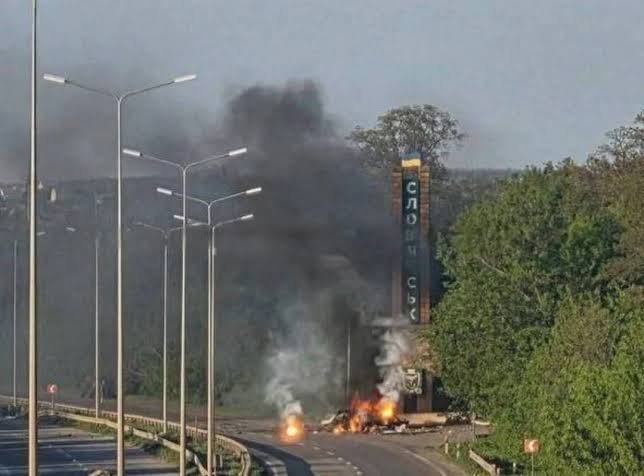
I’m from Tomsk, Siberia, where I graduated from the university’s philosophy department, taught there, and defended the rights of believers persecuted by the state. I often traveled to Ukraine, studying local religious communities. In 2014, I condemned Russia’s military actions — I said so openly in Tomsk media.
Because of that stance and my trips to Ukraine, the university refused to renew my contract, and there was no reason to stay in Russia. So in 2015, I moved to Kharkiv, where the local Krishna community helped me find a teaching job at Luhansk National University, which had relocated because of the war.
I traveled along the front line in Donbas, writing about how Christians lived amid the fighting. In Avdiivka, I helped deliver food to pensioners by bicycle with other volunteers. Among both us and the locals were people with pro-Ukrainian and pro-Russian views, but there was no conflict.
Only once did my Russian citizenship cause problems. In 2015, I was stopped at a checkpoint outside Avdiivka — at the time the military had orders to detain anyone with a Russian passport. An anti-terrorist unit took me away for questioning about my views, which, as a teacher, I even found interesting. They eventually said, ‘Don’t tease the soldiers anymore,’ and let me go. After that, I passed that checkpoint freely.
Sloviansk emptied out in 2014, as everyone who could do so fled the war-torn Ukrainian cities. People feared both shelling and reprisals. The husband of a friend of mine, a deacon, was taken by pro-Russian fighters under the command of Igor Girkin. He was tortured and executed. Residents began returning in 2015, but out of 110,000 people, about half remain today.
I moved to Sloviansk in 2020, bought a small house with help from a local Christian community, and received permanent residency in Ukraine. Until the full-scale invasion, life was quiet, maybe [there was] one explosion a week somewhere. Until drones appeared, even eight kilometers from the front line it felt peaceful, like the rear. Since 2022, the front has drawn much closer — both in reality and in feeling.
Now, when the explosions hit, no one goes to the shelters — it’s pointless. Air raid alerts happen five times a day, but the strikes rarely coincide [with it] because it’s impossible to track them all. Yesterday drones were flying over; today I read that one local was killed. Living through this is terrifying, but you get used to it with time.
A few months ago, there was an explosion 500 or 800 meters from me, the house was completely destroyed. I was walking to the market, and people around me barely reacted. They kept walking the streets, working, and buying food. There’s a big difference between systematic and sporadic shelling.
Now Kostiantynivka is being struck systematically: there’s no power, water or gas, drones and missiles are destroying homes one by one. When utilities and repair crews can’t even work — that’s systematic destruction. In Sloviansk, they fix things quickly after strikes, and people have accepted that any of them could be next. It’s a kind of Russian roulette. I’ve decided to stay until the very last moment, but if things get really bad, I’ll go to Kramatorsk.
Since the start of the full-scale invasion, prices have risen two to four times depending on the product. The variety of goods has decreased, but there will never be hunger here because Ukraine is a breadbasket. Even if a major war breaks out across the entire country, people will live on porridge, but they will live.
My citizenship or nationality has never mattered here, even after the start of the full-scale war. No one looks at your passport; they look at your beliefs. Everyone knows that Ukrainians curse Russians, but among themselves, they argue even more fiercely.
Because of the war, a sharp political culture has taken shape: any question is seen as a matter of life and death. Even in religious communities — among Hare Krishnas and Christians — there are debates over whether to take a pacifist or radically patriotic stance, whether to support the front or withdraw and focus on spiritual matters, whether to speak out actively or maintain neutrality. But everyone is united in a pro-Ukrainian position. No one holds a pro-Russian one. Even the traditional pacifism of the Hare Krishnas here is pro-Ukrainian: everyone wants Ukraine to win and criticizes Russian Krishnas for their different, pro-Russian “pacifism.”
It is natural that most of the blame is placed on Russians — they are the ones bombing us. But sometimes frustration is also projected onto the local authorities: why they didn’t prepare better, why there aren’t enough shelters, whether there is corruption, and so on. Russia is seen as the aggressor, and everyone understands that the Russians want to kill them. Therefore, no peace agreements are possible, nor is life under occupation.
Even communication with antiwar Russians isn’t working out for Ukrainians right now. I myself take part in some discussions, but only as an equal participant — like any other Ukrainian — and in both Ukrainian and Russian without any problem. And I can hear that no one here believes in dialogue or cooperation with Russians.
In 2022, Ukrainians naively thought it was possible to explain to Russians what was happening here, that they would understand and show support. But it soon became clear that no one could be convinced. And that was it, “dead means dead.” Even I have lost communication with like-minded people in Russia.
Some Russians say, “I support Ukraine. Ukrainians are our allies. We’ll stand together and try to convince other Russians not to go to the front. Let’s find common ground...” And Ukrainians reply: “That’s your problem. We live under bombs here, defending our country, and you want us to take part in your activities? The internal fight against Putin is your responsibility. We are fighting for survival.”
It also depends on the person. If someone speaks on behalf of Russians and takes responsibility for everything Russia is doing — or speaks only for themselves — they’ll be listened to. But when someone speaks on behalf of hypothetical “Russians who are against Putin,” that’s an immediate goodbye.
The idea of transferring our lands through any kind of agreement is completely unrealistic, even unimaginable. I myself will not live under occupation, and no one else will want to either. This isn’t the Middle Ages, when people could be handed over from one state to another like serfs.
First of all, there is a misconception in both Ukraine and Russia that the east is entirely pro-Russian and the west entirely pro-Ukrainian. That’s not true. It’s true that many in the Luhansk and Donetsk regions used to vote for pro-Russian parties. But there is no genuine Russian identity here, only Ukrainian or post-Soviet.
People here considered themselves locals because the idea of Ukraine had not yet fully formed — but it is taking shape now. Those who voted for the Party of Regions did not want to join Russia or see themselves as Russians; they wanted compromise, peace, and open borders, like in their Soviet past.
And in Donbas, more than half of the population felt that way. Pro-Russian politicians exploited these dreams and misrepresented them as genuine pro-Russian sentiment. It’s important to understand that Ukraine has no centralized propaganda like Russia does, so there’s complete anarchy in terms of information, and politics are hard to navigate. Every blogger, every party, every leader is their own propagandist. People were used to voting for local politicians without thinking about their “pro-Russian” stance.
In general, Russian propaganda is full of nostalgia for the Soviet Union. It even affects some young people who never lived in Soviet times but idealize it because they’ve been shown a picture of it as a paradise. Still, even they don’t want to be part of modern Russia.
Some people are politically illiterate. In Avdiivka, volunteers once brought food to an elderly woman whose apartment had been hit directly by a Grad rocket. The flat was burned out, but [Orthodox] icons still stood there — and among them, a portrait of [Viktor] Yanukovych. The woman said that under him, things were calm and life was good. Another man was hiding from mobilization, convinced that when the Russians arrived, they would give him an apartment in Donetsk and a job. In another building, an elderly man said he “didn’t know who was shooting at us.”
These people are not organized and cannot act as a political force demanding independence. But more and more people in Sloviansk now see themselves as Ukrainians, especially the young — and they know Ukrainian perfectly, unlike the older generation. Even the elderly now realize they live in Ukraine and that this is not just their local territory, but part of the Ukrainian state.
In 2015, half of the residents said, “We don’t care who’s in power, we’ll live under anyone.” But now no one here would agree to give up any territory under any circumstances. If you asked, “Would you agree to join Russia if these regions were transferred to it?” — the overwhelming majority would say, “Absolutely not,” even in exchange for peace.
When the referendum was held in Donbas, many people did come out to vote. It was a psychological reaction. People felt utterly helpless: they saw what was happening, couldn’t control it, and feared for the future. The referendum created the illusion that by voting, they could somehow influence events. It was a coping mechanism.
I believe that in the future, both sides’ use of artificial intelligence will affect the course of hostilities. The front will freeze, and we will lose the concept of the rear: the entire territory of both Russia and Ukraine will become a war zone. Because of drones, there will be no safe places anywhere, unfortunately. But without the drone revolution, the situation here would be much worse. The war had turned into one of attrition and was leading to Ukraine’s defeat. Now the odds have evened out. Technology is developing symmetrically: what we see in Sloviansk and in Kyiv will soon be happening across all of Russia. No one, in either Ukraine or Russia, will feel safe.
